A field guide to Pacific Northwest homes
When buying a house in the Pacific Northwest, check first for water damage: crawlspace moisture, roof moss, gutters and drainage around the foundation. On rural lots, add the well and the septic system. Then match the checks to the house style, since a 1920s bungalow, a cedar A-frame and a new build fail in different places.
Updated
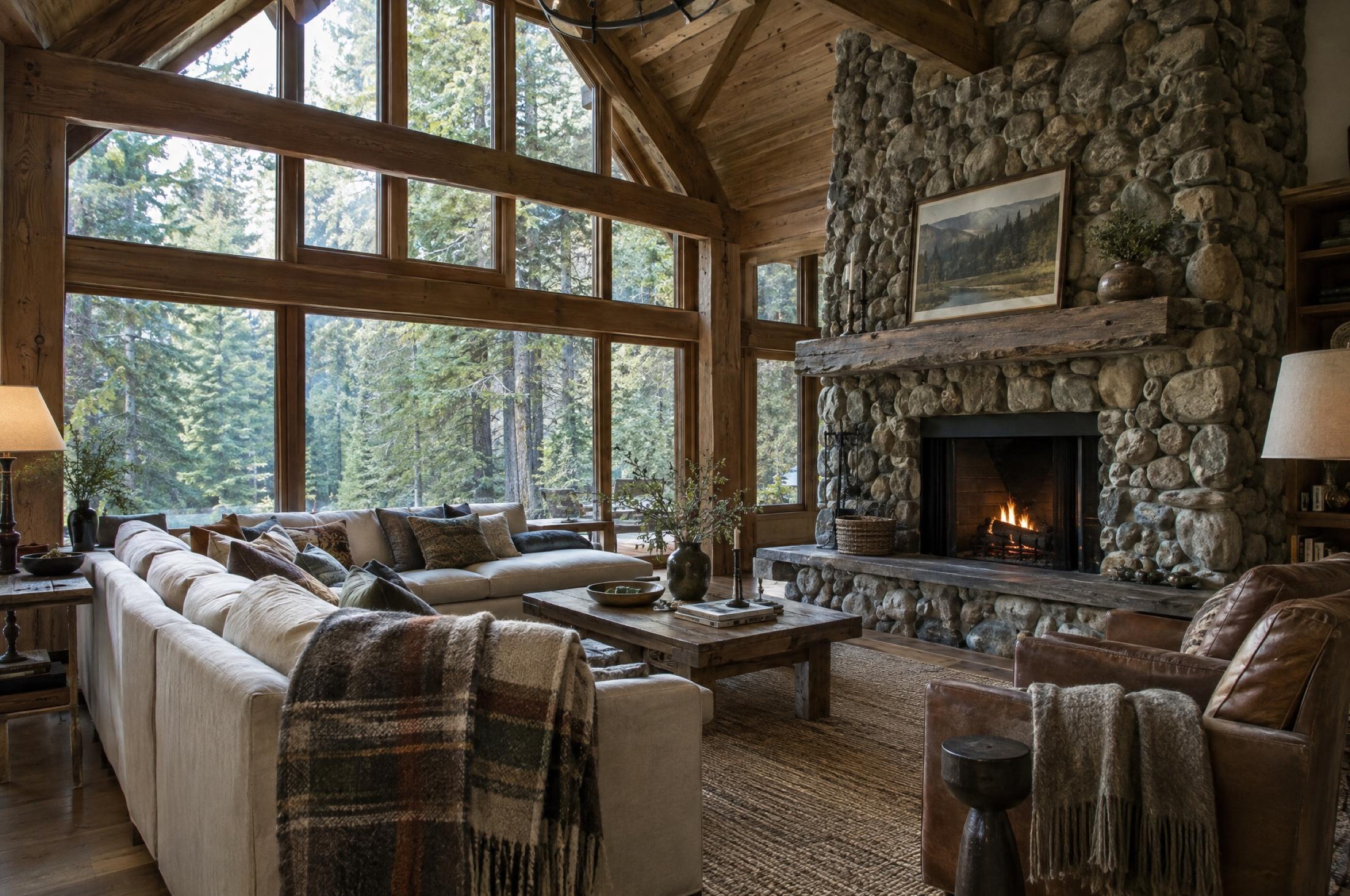
River rock hearth Timber great room
Western Washington is hard on houses. The rain finds every shortcut a builder or a past owner took.
It is wet from fall through spring. Much of the ground is clay or glacial till that drains slowly. Firs and cedars drop needles on every roof, and a windstorm can take the power out for a day or more. Below are the house styles you’ll see most out here, then a set of inspection notes that apply to nearly every one.
Craftsman bungalows

The craftsman bungalow is the house many of these towns grew up with. You’ll find them on the older streets of Enumclaw, Buckley, Orting and Sumner: low-pitched gable roofs, deep eaves with exposed rafter tails, tapered porch columns, often standing on piers of river rock or brick. Most were built in the first half of the twentieth century, and most have been remodeled at least once.
They are good houses to live in. The porch is a real room for half the year, and on the older blocks you can usually walk downtown for coffee.
What to check
Foundations first. Older bungalows may sit on post-and-pier or early concrete foundations, and the crawlspace can be low and damp. Look for knob-and-tube wiring and galvanized supply pipes. In homes that once heated with oil, ask about a buried or abandoned heating oil tank and whether there is paperwork showing it was decommissioned. Original single-pane windows are charming and drafty. Porches take the weather hardest, so look closely at the posts and at the beam where they meet.
Midcentury and post-and-beam
From the late 1940s into the 1970s, Northwest architects and builders put up houses with low roofs, exposed beams, clerestory windows and a lot of cedar. Some were architect-designed. Others arrived as pre-cut cedar packages from Northwest companies such as Lindal Cedar Homes and Pan-Abode. They turn up on the wooded hillsides around Issaquah and in older neighborhoods throughout the region, often sited to face the trees, with the street treated as an afterthought.
The best of them feel like part of the woods. The worst have been remodeled until nothing is left of the original idea.
What to check
Low-slope and flat roofs, especially where they meet a wall, a chimney or a skylight. Beams that run from inside to outside can rot at their exposed ends. Expect single-pane glass in wood frames, older electrical panels, and in some houses radiant heat in the slab, which is comfortable and expensive to repair when a line fails. Look at what a renovation kept. A midcentury house that lost its ceilings and windows lost much of its value to the people who want one.
A-frames and cabins
Cabins are the reason a lot of people start looking out here. In the foothills you’ll see everything from true seasonal cabins to full-time houses built in a cabin style. The A-frame, with its roof running nearly to the ground, was a popular vacation design from the late 1950s through the 1970s, and a fair number survive along the rivers and mountain roads.

Buying one is part romance and part arithmetic. Know which part is doing the talking.
What to check
Start with whether the place was built to be lived in year-round: insulation, the heating system, and whether the water supply can freeze. Loft stairs and ladders in A-frames can be steep and may not meet current code. The steep roof sheds snow well, but snow sliding off it lands somewhere, often on the deck or the path to the door. Check permits on additions and bedrooms, since cabins sometimes grew over the decades without them. If you plan to rent it out part of the year, check the county’s short-term rental rules before you count on the income.
New Northwest contemporary

Newer homes in the foothills often take their cues from the older ones: big glass, exposed timber, stone chimneys, and shed or gable roofs finished in standing-seam metal. Many sit on lots split from older acreage. Some are custom builds on land an owner held for years before building.
Built to recent Washington energy codes, they are tight and full of daylight. They also depend on mechanical systems that older houses never had.
What to check
Water management around all that glass, and the flashing where metal roofs meet walls and chimneys. Ventilation matters in a tightly built house, so look for a working ventilation system and for condensation on the windows. Heat pumps are common and efficient; ask about backup heat for cold snaps and outages. On new construction, get the builder’s warranty in writing and read what it actually covers.
Acreage with outbuildings

On the Enumclaw Plateau, around Buckley and along the valley floors, you’ll find acreage: pasture with a farmhouse, a barn and a shop, fenced paddocks, sometimes a riding arena. Listing photos mislead most on this kind of property, because the parts that matter are spread across the land and rarely photographed well.
Walk all of it. Then walk it again after a heavy rain.
What to check
Whether each outbuilding was permitted, and what it was permitted as. A shop built as agricultural storage may not be usable as living space. Fencing and gates, the condition of the barn roof, and where the water goes when the lower field floods in winter. Ask about any current use or open space tax classification, since removing land from those programs can bring back taxes. Check for easements that let a neighbor or a utility cross the property. If you plan to keep animals, ask the county what your zoning allows.
Inspection notes for wet, wooded ground
These apply to almost every house in this guide. Bring them on tours, and hire a licensed home inspector, plus septic and well specialists where they apply.
Moisture
The most common problem in older western Washington homes. Check the crawlspace for a vapor barrier, standing water, and rot at the sill plate. Look for gutters that dump next to the foundation. A musty smell in a closed-up house deserves to be taken seriously, even if everything looks dry.
Moss on the roof
Moss holds water against shingles and lifts them. A little is normal under firs; a thick mat means the roof has been neglected. Ask the roof’s age and look hardest at the valleys and the north-facing slope. Zinc or copper strips near the ridge slow regrowth. Cedar shake roofs need more care than composition or metal.
Wells
Ask for the well log, past water tests, and any records of pump or pressure tank replacement. Test flow and water quality during your inspection period. Shared wells should come with a written well-sharing agreement that covers repairs and access.
Septic
Ask the county health department for the system’s records. Plan a septic inspection, often with the tank pumped. Find the drainfield on the ground and make sure nobody drives, parks or builds on it. Ask about the system type. State rules call for a system with pumps or a treatment unit to be inspected every year, compared with every three years for a basic gravity system, and the local health department may require a maintenance contract.
Drainage
Clay and glacial till drain slowly. Walk the property in the rain if you can. Look for downspouts tied into working drains, grading that slopes away from the house, and a sump pump in low crawlspaces. Near rivers, check the flood maps. In the Puyallup and Carbon valleys, read the lahar hazard maps too.
Wildfire defensible space
The west side of the Cascades burns less often than the east, but dry late summers have brought fire to the western slopes. Look at the first five feet around the house: bark mulch, stacked firewood and dry needles against the siding are fuel. Check the gutters and roof for debris, and whether the driveway lets a fire truck turn around.
Power outages
Windstorms bring trees down on lines, and rural roads can be among the last restored. Ask the seller how often the power goes out and for how long. A generator with a properly installed transfer switch, a woodstove, and backup power for the well pump all make an outage easier to sit through. If you work from home, confirm that cell and internet service are good enough before you write the offer, since both can be thin in the foothills.

Questions buyers ask about older Northwest houses
- How much moss on a roof is too much?
- A thin film under fir trees is common. A thick mat that lifts shingle edges, or moss packed into the valleys, means the roof has been holding water. Ask the roof’s age, and have your inspector look hardest at the valleys and the north-facing slope.
- Can an A-frame cabin be a full-time home?
- Yes, if it was built or upgraded for year-round living. Check the insulation, the heating system, whether the water lines can freeze, and whether the loft stairs are safe for daily use. A cabin built for summer weekends may need real work before it handles a January.
- What does a crawlspace inspection look for in western Washington?
- Standing water, a torn or missing vapor barrier, rot at the sill plate and a musty smell. Gutters and downspouts that empty against the foundation are a common cause. In a low crawlspace, a working sump pump is a good sign.
- Do I need separate well and septic inspections?
- Usually. A general home inspector may note what they can see, but septic systems are inspected by specialists, often with the tank pumped, and well flow and water quality are tested on their own. King and Pierce counties each have septic rules that apply when a home sells.
- How do I find out if an older house had an oil tank?
- Look for a fill pipe or a vent pipe near the foundation, ask the seller, and ask for any decommissioning paperwork. If the signs point to a tank, your inspector can suggest a specialist who scans the yard for one.
Further reading
- King vs. Pierce County Septic Rules When a Home SellsHow the septic inspection at sale works in each county, who arranges it, and how a buyer reads the report.
- Uncertified Wood Stoves and Burn Bans in Pierce CountyHow to check a stove’s certification, and what burn ban days mean for a house you’re buying.
- Coal Mines Under Black Diamond Homes: What to CheckHow to check one parcel in Black Diamond, Issaquah or Wilkeson for old mine workings before you buy.
Bring this list on every tour.
If you’ve found a house out here and want a second opinion before you offer, call me. I’ll walk it with you and tell you what I see, problems included.