Is a Septic Inspection Required When a House Sells in King or Pierce County?
The short answerYes, both counties require one, and they handle it differently. In King County the seller hires a certified on-site system maintainer, who inspects the system and files a report with the county’s public health department before title transfers. In Pierce County the seller has the tanks pumped and inspected by a certified septic company, then applies to the Tacoma-Pierce County Health Department, which inspects the property and issues a Report of System Status.

By Austin Hellickson, Managing Broker, LPT Realty7 min read
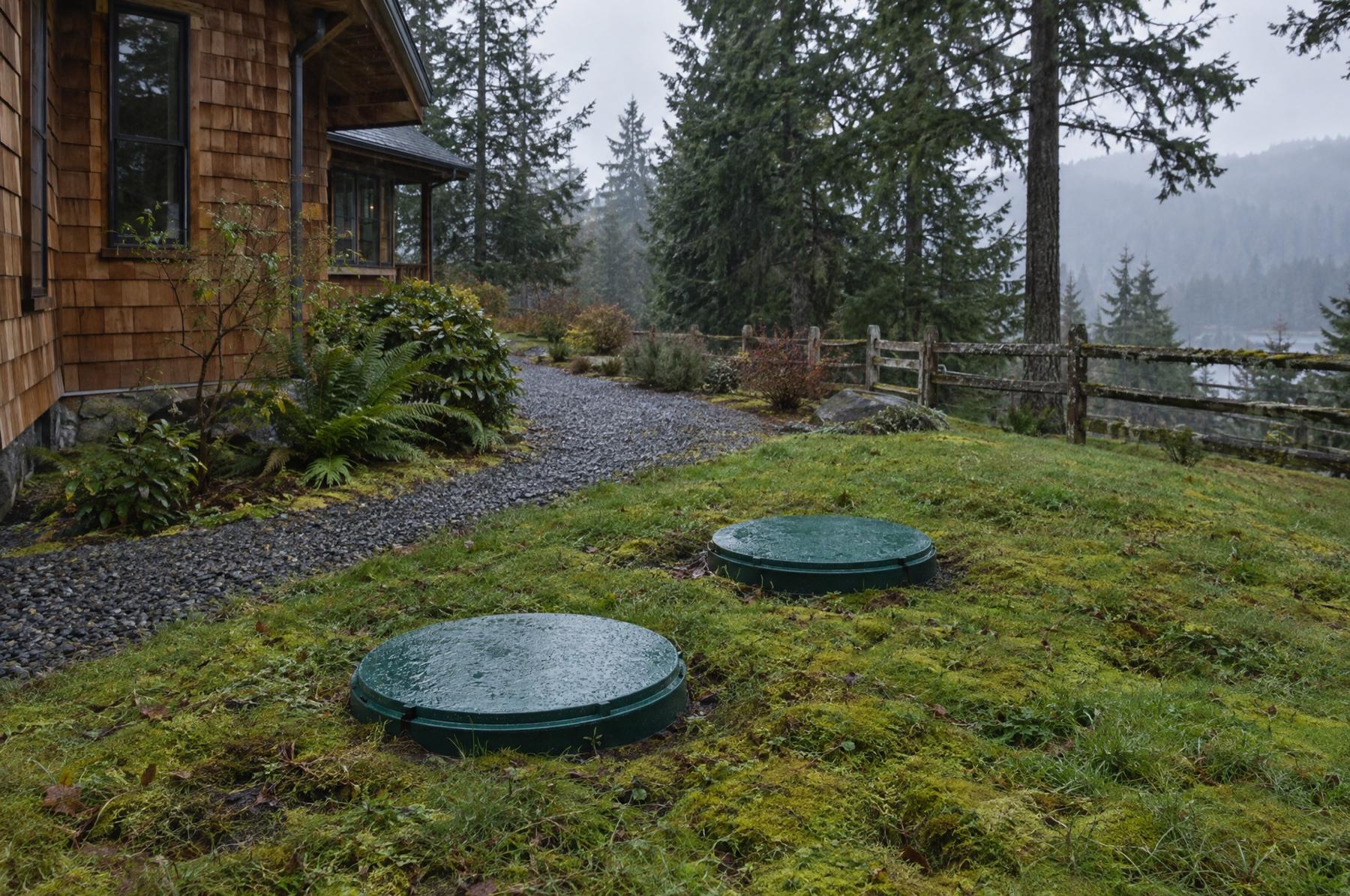
Rural lotTwo tank lids in a wet lawn.
Why the county line matters out here
The White River runs between Enumclaw and Buckley, and it is also the line between King County and Pierce County. A buyer who looks at acreage on the plateau one Saturday and a farmhouse outside Buckley the next is dealing with two health departments, two sets of forms and two ideas of what a septic check at sale should involve. The same split applies to Black Diamond and North Bend on the King side, and to Orting and Wilkeson on the Pierce side.
Both counties expect something to happen before a house on a septic system changes hands. The seller arranges it in both. After that, almost everything differs: who does the fieldwork, whether the tanks get pumped, and what paper comes out the other end.
| King County | Pierce County | |
|---|---|---|
| Who does the fieldwork | A certified on-site system maintainer | A certified septic service company, then a Health Department inspector |
| Tanks pumped | Not a set step in the county process; ask for it if you want it | Yes, as part of the process |
| What you end up with | An inspection report filed with Public Health | A Report of System Status (RSS) issued by the Health Department |
| Extra step for the seller | Recording a notice of operation and maintenance requirements | Resolving major deficiencies the department flags |
King County: the time‑of‑sale inspection
In King County, the seller schedules an inspection with a certified on-site system maintainer before title transfers. The maintainer goes over the system and submits the report to Public Health, whose staff review it. As a buyer, you should see a copy early in the transaction. If you haven’t, ask for it.
Before closing, the seller also records a Notice of On-site Sewage System Operation and Maintenance Requirements with the King County Recorder’s Office. It is a short document. Its job is to put the next owner on notice that the system comes with upkeep duties, and your escrow officer will usually ask whether it has been recorded.
A few waivers exist. A system that had a routine monitoring inspection recently enough may not need a separate one, and brand-new construction and houses already connected to sewer are handled differently. The time windows depend on the type of system. If a seller tells you no inspection is needed, ask which waiver applies and ask to see the paperwork behind it.
Pumping isn’t a set step in King County’s time-of-sale process the way it is in Pierce. If you want a pump-out so the tank walls and baffles are visible, say so early and write it into the agreement.
Pierce County: the Report of System Status
Pierce puts the Health Department closer to the work. The seller hires a septic service company certified to work in Pierce County to pump the tanks and inspect the system. The seller then applies to the Tacoma-Pierce County Health Department for a Report of System Status, or RSS. The department reviews the application, sends someone out to the property, and asks that major deficiencies be fixed before it signs off.
The finished RSS describes the system’s condition at the time of inspection and lists any minor deficiencies, along with guidance on long-term care. The review takes time and sellers are told to apply early, so on a house in Buckley or Orting I want to know on day one whether the RSS is finished or still in process. That answer shapes the closing date we can realistically write.
If deficiencies are still open when the house sells, ask the department about a conditional report, which can let a buyer take on the repairs after closing within a set deadline. That can keep a deal together. It also moves the problem onto you, so price it in. On well property, ask what the department has on file for the water supply as well.
What the inspector looks at, and what falls outside the report
A time-of-sale inspection is a look at the system on one particular day. It typically covers finding the tanks and lids, checking liquid levels, looking at baffles and effluent filters, checking for sewage surfacing or soggy ground over the drainfield, and testing pumps, floats and alarms on systems that have them. Pressure distribution systems, mounds, sand filters and treatment units have more parts to check than a simple gravity system, and they usually need more frequent service after you move in.
Some things sit outside the report. Nobody can see how many years a drainfield has left; an inspector can only tell you whether it is working now. The report is also not a design review, so it may not tell you whether the system was sized for the number of bedrooms in the listing. On older rural houses, a bedroom added without a health department sign-off is a common gap, and it matters if you plan to add another. The inspection also won’t tell you where a new shop or barn can go without landing on the reserve drainfield area.
For those answers, pull the county file: the record drawing (sometimes called an as-built) and any past service reports. Both counties offer online lookups by address or parcel, and health department staff can help when a file is thin. The Field Guide covers where septic fits among the other rural inspection items, from wells to drainage.
Reading the report as a buyer
Read the report with the record drawing next to it. Check that the tanks and drainfield the inspector describes match the drawing, and that the system type matches the listing. Watch for phrases like “surfacing,” “ponding,” “root intrusion,” “missing baffle” and “alarm inoperable.” Then read the recommendations section slowly. That is where inspectors put the items that still work today and will need money later.
Compare the report with the seller disclosure statement too. Washington’s disclosure form asks about the on-site sewage system, and any gap between the two answers deserves a question.
If the seller’s inspection feels thin, you can hire your own septic inspector during your inspection period. On a property you are serious about, I usually suggest it. The seller’s inspection exists to satisfy the county. Yours exists to answer your questions, including the ones about bedroom count and where a future shop could go.
When the report finds a problem
Small items, like a cracked lid or a clogged filter, are usually settled with a repair before closing or a modest credit. Bigger findings change the conversation. A failed drainfield can mean a new design and permit before a replacement system goes in, and on the slow-draining soils common in the foothills that design may call for a pressure or mound system. Costs and timelines vary a great deal, and a licensed septic designer is the person who can put a number on it.
From there the choices are the familiar ones. Ask the seller to repair. Ask for a price reduction or a credit. In Pierce, ask whether a conditional report is an option. Or walk away inside your inspection contingency. Before you agree to take on a failed system after closing, talk to your lender, because some loan programs won’t allow it.
State rules changed recently
Washington updated its statewide on-site sewage rules in 2024, and King County’s revised local septic code took effect in April 2025. County programs adjust to the state rules over time, so forms and steps may shift. This article is general. Confirm the current process with the county health department before you rely on it.
Living with a septic system after you move in
Mark the drainfield and keep vehicles and livestock off it, and plan any new building around it. That includes horses, which comes up often on the plateau and is one of the things I cover in what to look for in horse property near Enumclaw. Keep up with the inspection schedule your county sets, which is more frequent for systems with pumps or treatment units. Find the lids before the first winter, because hunting for them under wet moss in January is miserable work. Keep every service receipt in one folder. When you sell, the next buyer will ask for them.