Can I Legally Use the Wood Stove in a House I’m Buying in Pierce or King County?
The short answerUsually, if the stove is EPA certified, with limits on air quality burn ban days. Inside the Tacoma-Pierce County Smoke Reduction Zone, an uncertified stove has been illegal to operate since October 1, 2015 and has to be removed or made inoperable unless the household holds an approved No Other Adequate Source of Heat exemption. Elsewhere in King and Pierce counties an older stove can still be used on ordinary days, but not during a burn ban.

By Austin Hellickson, Managing Broker, LPT Realty6 min read
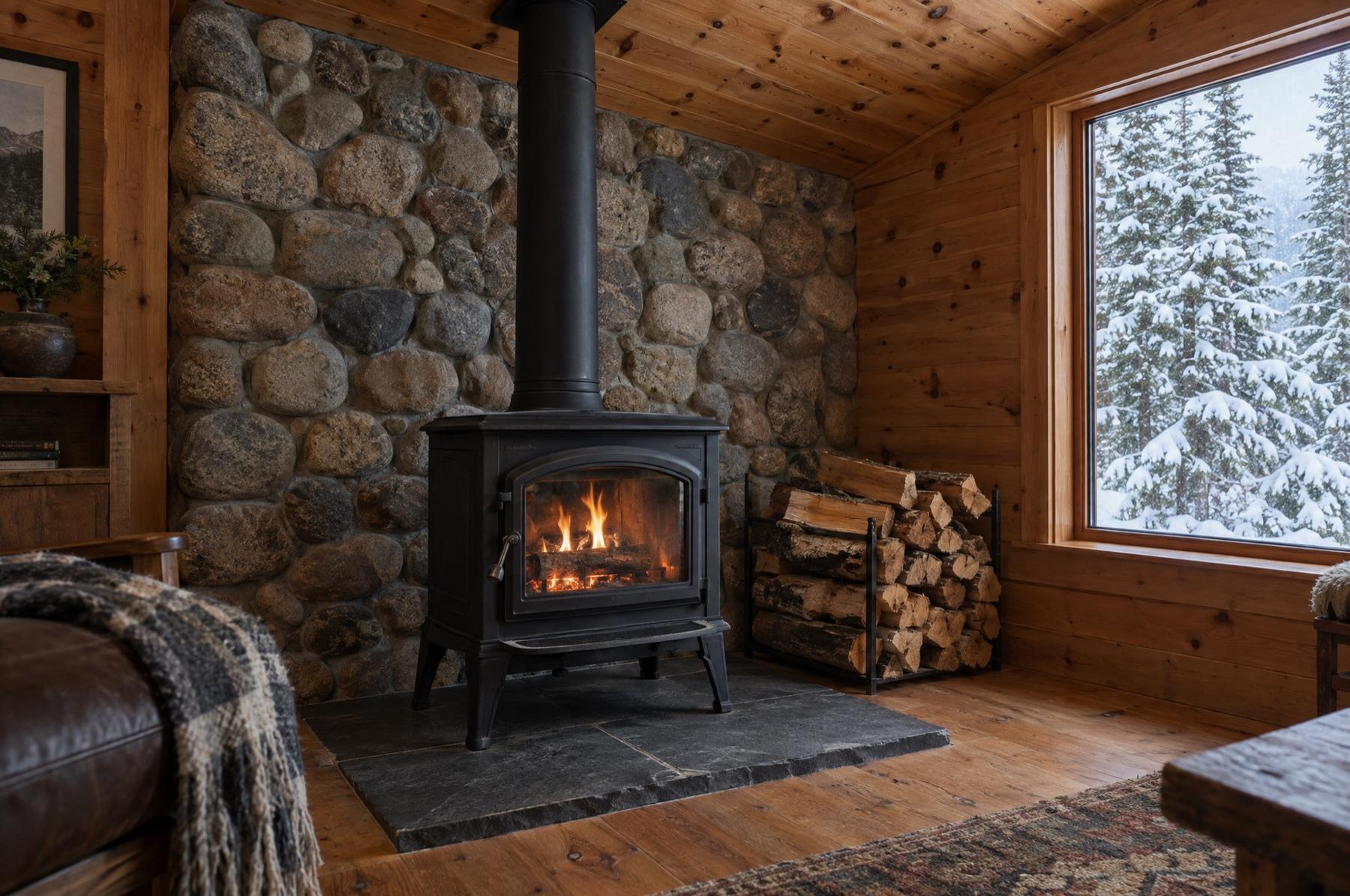
Cabin interiorA stove on a slate hearth, firs outside.
A wood stove is half the reason some people want a foothill house, and it is more regulated than most buyers expect. The answer comes down to the stove, the address and the day. On a tour I start at the back of the stove and finish with a call to your insurance agent.
Find the certification label
A certified stove carries a permanent label, usually on the back or one side, showing that it meets EPA emission standards. Some older stoves carry an Oregon DEQ certification label instead, which the Puget Sound Clean Air Agency also recognizes. On a fireplace insert, the label may be hidden behind the decorative surround, and you may need the owner’s manual or the seller’s help to find it.
When the label is missing or unreadable, a few rough clues help:
- Solid metal doors on the front usually mean the stove is uncertified.
- Two glass doors usually mean the same.
- A single glass door, like most modern stoves, needs more information before you can tell.
A tag reading “UL tested” or “UL listed” is about fire safety and says nothing about emissions. If you can read a brand and model, look it up on the EPA’s list of certified wood heaters. If you can’t, photograph the front and back and take the photos to a hearth dealer.
Is the address in the Smoke Reduction Zone?
Since October 1, 2015, it has been illegal to operate an uncertified wood stove inside the Tacoma-Pierce County Smoke Reduction Zone. Uncertified stoves there have to be removed or made permanently inoperable. The zone covers the part of Pierce County that once failed federal standards for fine particle pollution.
The boundary doesn’t follow town names neatly, so check the specific address on the zone map on the agency’s website. There is no matching removal rule in King County. An uncertified stove in a cabin outside North Bend or on a farm near Enumclaw can still be used on ordinary days, subject to the burn ban rules below.
State law also makes it illegal to sell, give away or install an uncertified wood stove, so an old stove pulled out of the house can’t go into your shop. How the rule treats an old stove that is simply part of a house being sold is a question for the agency, and if the house is in the zone it is reasonable to raise removal or a credit in your offer.
How burn bans work
The Puget Sound Clean Air Agency covers King, Pierce, Snohomish and Kitsap counties. In the colder months, calm air and temperature inversions can trap smoke close to the ground, and when that happens the agency calls an air quality burn ban. There are two stages.
| Stage | What you may not burn | What you may still use |
|---|---|---|
| Stage 1 | Fireplaces and uncertified wood stoves | A certified wood stove |
| Stage 2 | Fireplaces and every wood stove, certified or not, plus pellet stoves | Your other heat source |
The only exception in either stage is a household with an approved No Other Adequate Source of Heat exemption. Ban status is posted on the agency’s website, and you can sign up for alerts. If you plan to heat mostly with wood, you still need another way to stay warm on a Stage 2 day, even with a brand-new certified stove.
When the stove is the only heat
The agency defines an adequate source of heat as one that can keep every normally lived-in room at 70°F, measured three feet above the floor. An exemption has to be approved before you burn during a ban, and it doesn’t last indefinitely, so plan on renewing it.
Most houses also have a furnace, baseboard heaters or a heat pump, so the exemption comes up mainly in older cabins where the stove really is the whole heating system. If that describes the house you’re looking at, factor in the Stage 2 days before you fall for it.
Insurance is the other half of the question. When a stove is the primary or only heat, insurers tend to ask more: whether the stove is certified, who installed it, whether there was a permit, when the chimney was last inspected. Some carriers are comfortable with that and some are not, and the rules vary by company. Call your insurance agent with the stove’s details during your inspection period, before you remove contingencies. Your lender will require a homeowners policy, so a surprise here can hold up closing.
Chimney, clearances and hearth
A stove can be certified and still be installed badly. Follow the stovepipe from the collar to the roof. In a cabin with a pine ceiling, look closely at where the pipe passes through it, and check the wood around it for scorching or dark stains. A certified stove’s label lists the clearances it needs from combustible walls and the size of the floor protection in front of it. Compare those to what is actually there. A river rock wall looks fireproof, but it may be a veneer over wood framing, so it helps to know how it was built. Outside, look for a chimney cap and note how close the nearest fir branches hang.
Ask the seller for the installation permit and the last sweep receipt. A general home inspector will usually note the stove and recommend further evaluation without inspecting the flue. The national standard for chimneys, NFPA 211, calls for a more thorough Level 2 inspection when a property is sold, usually with a camera run up the flue, so I usually suggest hiring a certified chimney sweep during the same inspection window where you would schedule a septic inspection in King or Pierce County.
Replacing an old stove before the first cold snap
If the stove has to go, or you want it gone, timing matters. Hearth dealers and installers fill their calendars in the fall. A new installation usually needs a permit from the city or county, and your insurer may want to see it. If you close in October, the first hard frost can arrive before the new stove does.
The Clean Air Agency has run a wood stove program that pays a cash reward for recycling an uncertified stove. Funding comes and goes, so check whether it is open when you buy. A replacement can also be part of the negotiation, as a repair or a credit, though lenders sometimes limit how large a credit can be. Some buyers skip the stove entirely and put in a ductless heat pump, keeping the wood stove idea for a later project.
Whatever you choose, have a backup for the day the power goes out, which in the foothills is often the same day the wind comes through. The Field Guide has more on outages, generators and the other things rural houses ask of their owners.
These rules come from the Puget Sound Clean Air Agency and can change. Confirm the current rules for a specific address with the agency, and confirm coverage with your insurance agent.
Quick answers
- Can I use a fireplace during a burn ban?
- No. Fireplaces are off limits during both Stage 1 and Stage 2 burn bans unless the household has an approved No Other Adequate Source of Heat exemption.
- Is a pellet stove treated differently?
- Pellet stoves are generally allowed during a Stage 1 ban. During a Stage 2 ban they are off limits along with certified wood stoves.
- Can I sell or give away the old stove after I remove it?
- No. Washington law makes it illegal to sell, give away or install an uncertified wood stove. It can be recycled, including through the Clean Air Agency’s program when funding is available, or rendered inoperable and taken to a scrapyard.