What Should I Look for When Buying Horse Property Near Enumclaw?
The short answerStart with the ground and the water, then the buildings. On the Enumclaw Plateau, look hard at how the pasture drains in winter, where the stock water comes from, whether the barn and arena were permitted, and what King County’s zoning and livestock rules allow on that parcel. The King Conservation District offers free farm planning that can show you how a place would work for horses before you commit.

By Austin Hellickson, Managing Broker, LPT Realty7 min read
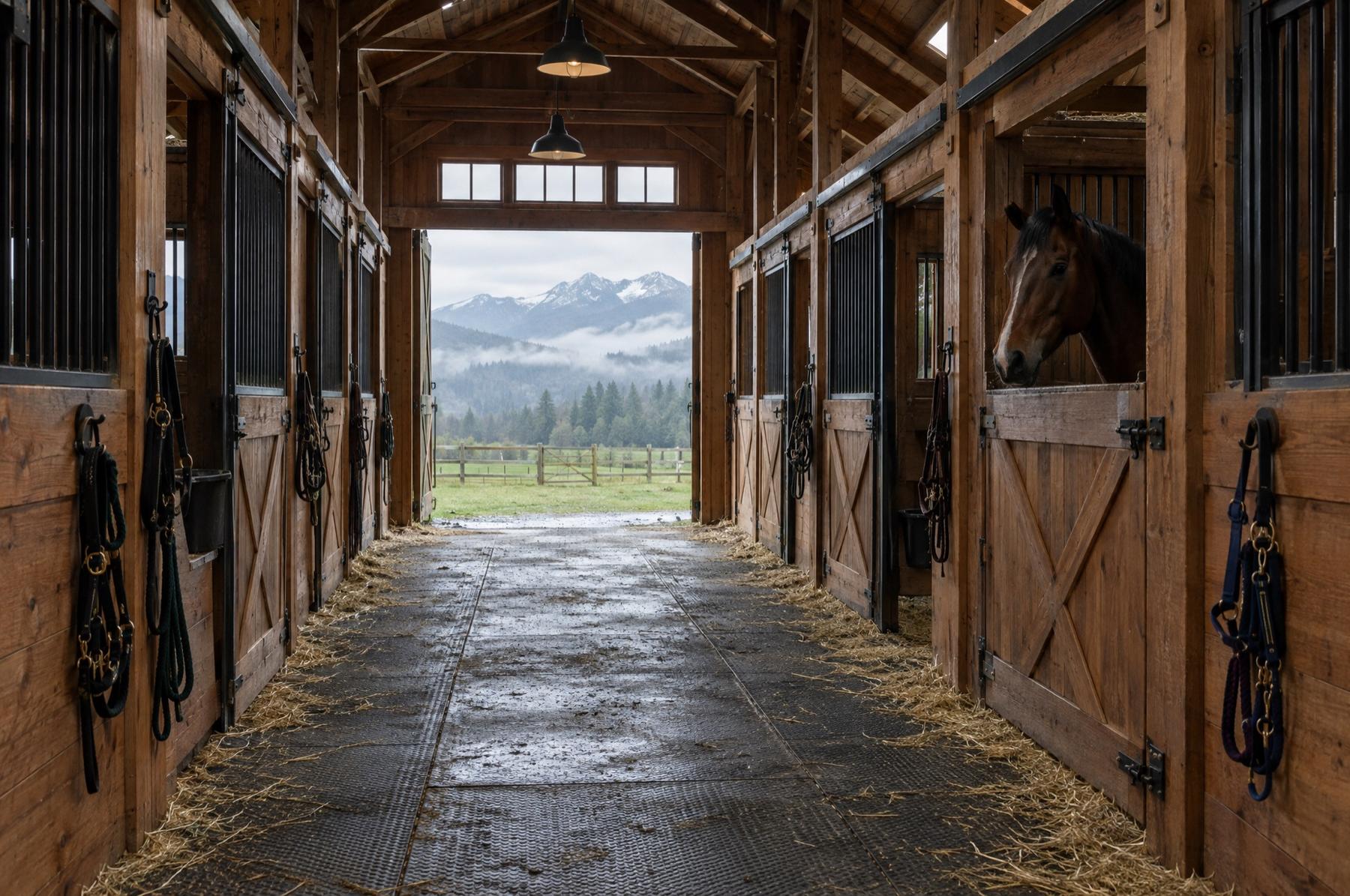
Enumclaw PlateauA barn aisle open to the pasture.
Horse property is two purchases wrapped in one. There is a house, which a home inspector knows how to read. And there is a small working farm, which nobody reads for you unless you ask. Listing photos lean toward the house, and the barn aisle when it is swept. The rest of this article is about the farm.
Where horse property sits on the plateau
The Enumclaw Plateau is the broad, flat country between the Green River to the north and the White River to the south, with Mount Rainier filling the view on a clear day. Much of the farmland around town sits inside a King County agricultural production district, a designation meant to keep farmland in farming. The Enumclaw Expo Center hosts horse shows through the year.
Two things about the location affect what you are buying. First, some farms on the plateau have sold their development rights to King County through its Farmland Preservation Program. That puts lasting limits on dividing the land or adding houses, and it shows up in the title report, so read the exceptions page closely. Second, the White River is also the county line. A place outside Buckley is in Pierce County, with its own zoning, its own health department and its own conservation district. Buyers often compare the two sides, and the rules are not interchangeable.
The roads matter too. SR 164 heads toward Auburn, SR 169 north toward Black Diamond and Maple Valley, and SR 410 east into the mountains. If you will pull a trailer, drive the route from the farm gate to the highway yourself, including the turn out of the driveway.
Walk the pasture first, and walk it wet
Much of the plateau sits on the deposit of an ancient mudflow off Mount Rainier. It makes good grass. It also holds water, and in a wet winter a pasture that looked perfect in August can turn into standing puddles and mud to the fetlock around the gate and the water trough.
If you can, see the property after a few days of rain. Look for:
- Low spots where water collects and the grass has given way to rushes or bare soil.
- A sacrifice paddock or heavy-use area with real footing, like hog fuel or gravel over fabric, where horses can stand in winter so the pasture can rest.
- Gutters and downspouts on the barn that carry roof water away from the paddocks.
- Where the manure goes, and whether the pile is covered and sits well back from ditches and creeks.
Ditches and small streams deserve a second look. On the plateau, a ditch along a fence line may be a mapped stream or feed one, and streams and wetlands come with buffers that limit where animals, fences and buildings can go. King County’s iMap shows mapped critical areas by parcel. It is a starting point for questions, and the county planners are the people who give answers.
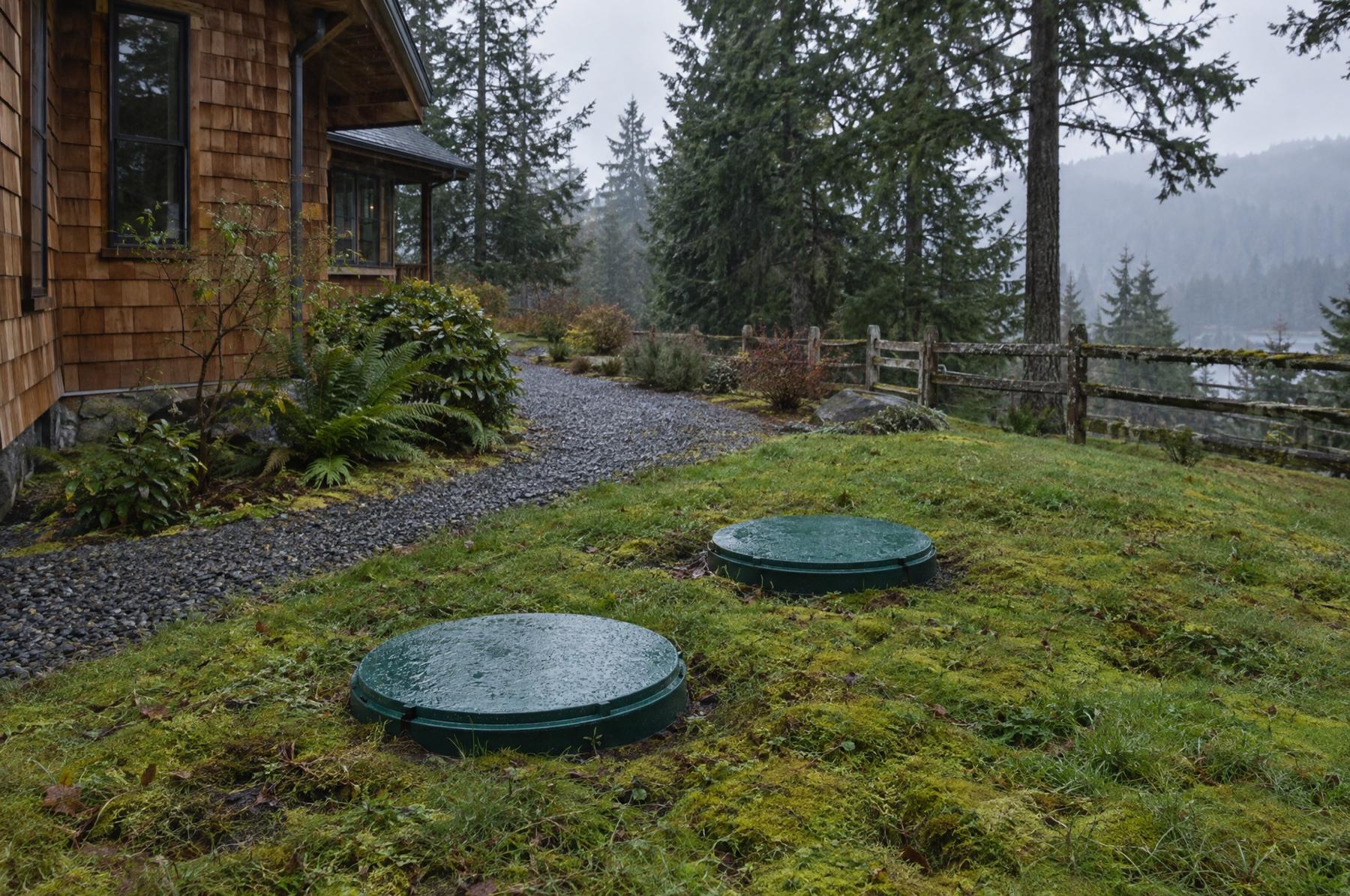
Also find the septic drainfield before you plan a single fence. Horses and drainfields don’t mix, because hooves compact the soil the system depends on. I cover the county paperwork in how septic inspections work when a home sells in King or Pierce County, and on horse property the drainfield location belongs on your site plan from day one.
Barns and arenas: ask how each one got built
Outbuildings are where rural paperwork most often falls short. A barn from decades ago, an arena roof added later, a tack room that grew a bathroom, a shop someone started living in. Each may or may not have a permit behind it, and what it was permitted as matters as much as whether it was permitted at all.
King County has its own rules for agricultural buildings, and some farm structures go through a lighter process than a house does. That still leaves a record, or should. Ask the seller for permits, then check the county’s permit records by parcel. A covered arena is a large structure, and if the plan is to board other people’s horses or give lessons, ask the county how that changes the use before you count on the income. On the Pierce side, the same questions go to Pierce County’s planning office.
Then look at the buildings the way a horse will. Stall doors and latches, the condition of posts at ground level where urine and wet bedding rot wood, the barn’s wiring (older barns often have wiring that was never meant for heated waterers and fans), and whether the hay is stored somewhere dry and away from where people and animals spend their time.
Water for the house and for the stock
Some plateau properties are on a city or community water system. Many are on a private well. Either way, figure out how water reaches every place a horse drinks. A hydrant in the barn aisle is easy in July and a chore in a January freeze unless it is a frost-free hydrant. Heated waterers need power where the trough is. And when a windstorm takes the power out, a well pump stops, so ask whether there is a generator and a transfer switch that can run it.
On a well, ask for the well log and past test results, and test flow and water quality during your inspection period. Washington lets a household well serve a home and livestock without a separate water right, within limits. Irrigating pasture is where those limits bite. If the plan involves watering fields in August, confirm what is allowed with the Department of Ecology before it becomes part of the price you pay.
Livestock rules and the conservation district’s farm plans
King County’s Livestock Management Ordinance sets management standards for people who keep animals, with a focus on protecting streams and wetlands. Zoning also affects how many animals a parcel can support. The details depend on the lot and its critical areas, so ask the county about a specific address rather than relying on a rule of thumb.
This is where the King Conservation District is worth a call. The district is non-regulatory, and its farm conservation planning is free. A resource planner will walk a property with the owner and put together a plan covering things like stream-side fencing, gutters and downspouts, composting manure, sacrifice areas, cross fencing and pasture rotation. A farm plan can also help an owner meet the county’s livestock standards. Buyers usually can’t get a full plan before closing, but knowing the service exists changes how daunting a muddy pasture looks. On the Buckley side, the Pierce Conservation District does similar work.
One tax note. Some farms are enrolled in a current use program that taxes the land on its farm value. Taking land out of that program can bring back taxes, so ask the seller and the county assessor what enrollment the parcel has and what continuing it would require. A tax professional can tell you what it means for your situation.
Riding from home
Plenty of people buy on the plateau to ride from the barn, and it is worth testing before you buy. Traffic on SR 164 and SR 410 includes fast cars and heavy trucks, so a farm on a quiet county road with wide shoulders makes everyday riding much easier. Beyond the roads, the Army Corps of Engineers land around Mud Mountain Dam and the Foothills Trail out of Buckley are two places riders ask about. Rules on horse use vary by trail and change over time, so check with the land manager. Much of the forest to the east is private timberland, and access there depends on the owner’s permit program.
If you trailer out more than you ride from home, weigh the drive to the places you actually go. That kind of trade is part of how I set up a search, which you can read about on how the search works.
The paper trail to request
- Permits for the house, barn, arena and any shop or added living space.
- The well log, water tests and any water system or sharing agreements.
- Septic records and the record drawing showing the drainfield.
- Any farm plan, conservation easement or current use enrollment on the land.